 The Job Lane Farm Museum has been a landmark for over three hundred years. Here is its story:
While it appears that Native Americans never settled on this land, in former days they journeyed the trails nearby, and they knew of the iron and Sulphur springs that bubble up into a shallow lake half a mile to the east.
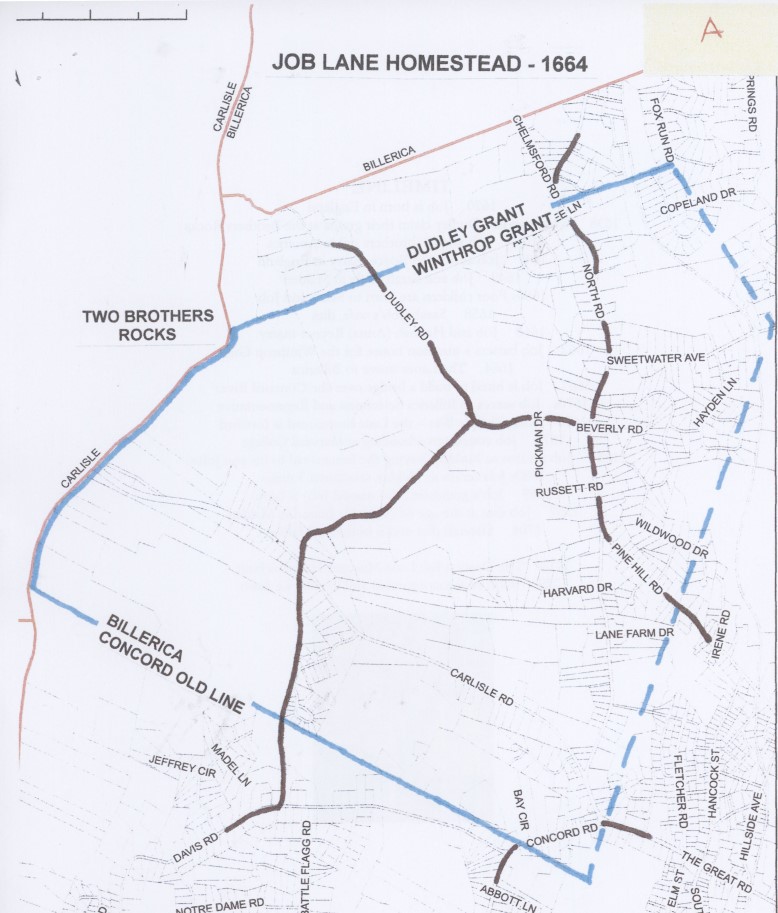
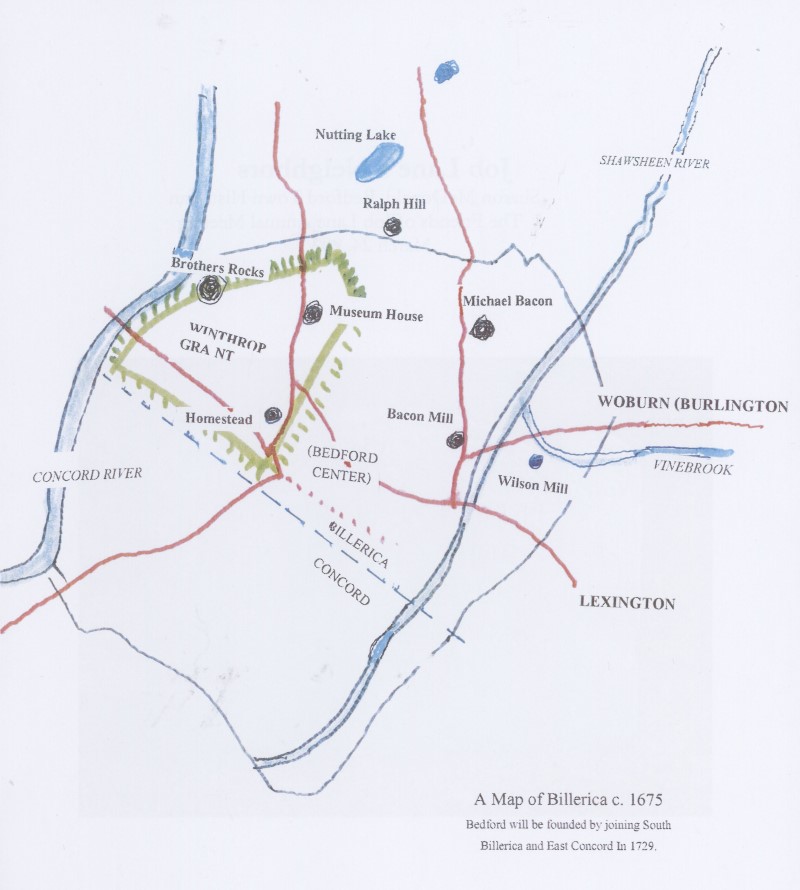
Land ownership began in 1637, when the Massachusetts Great and General Court granted Governor John Winthrop about 1500 acres, from Billerica, in what is now Bedford. Winthrop did not clear any of the land or build upon it. In 1664 the Governor’s grandson, having inherited the land, transferred it to house wright Job Lane (c.1620-1697) in exchange for a house that Lane built him in Connecticut.
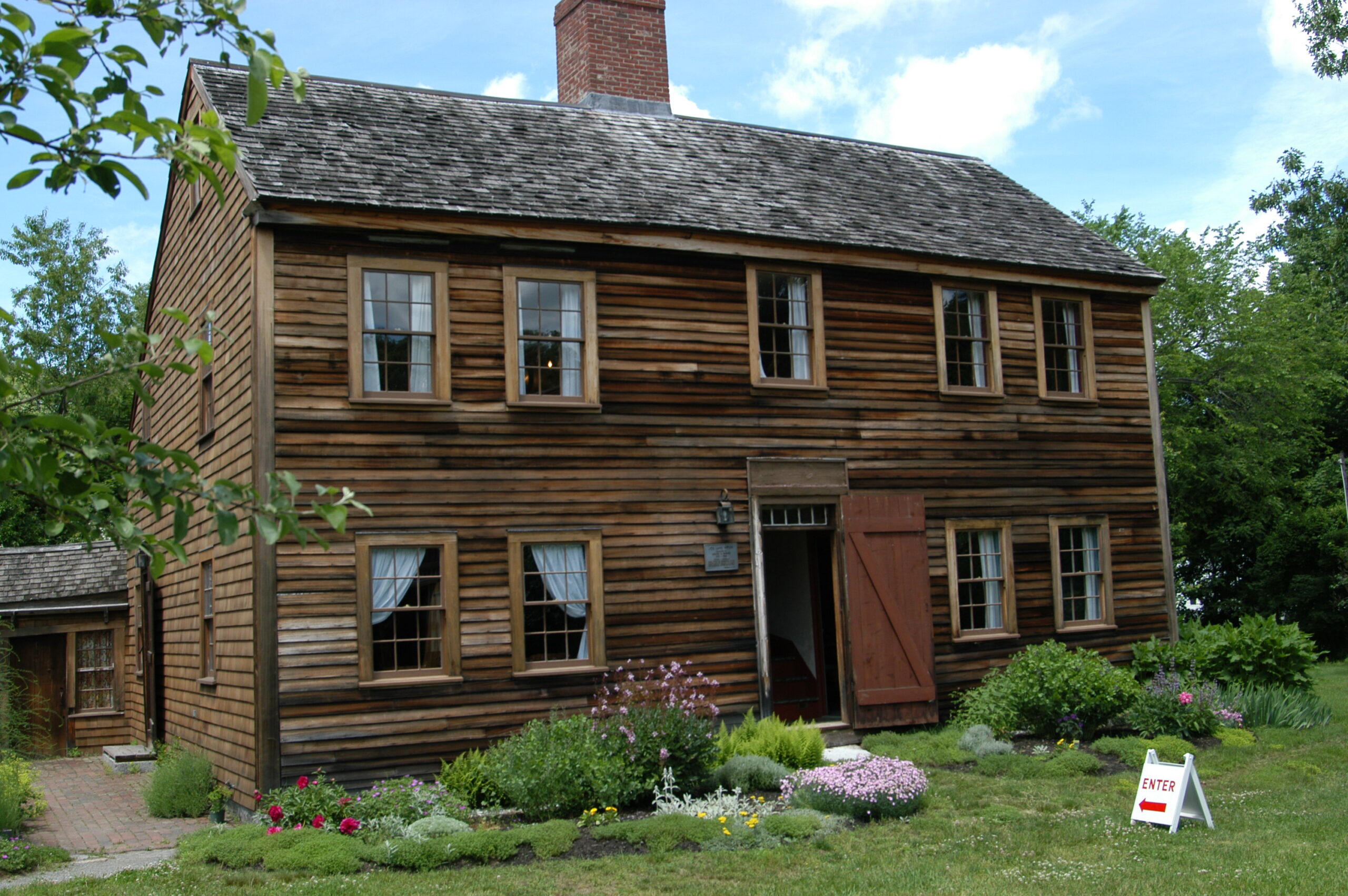
Lane did improve the land and moved his family here. His oldest grandson, also named Job Lane (1689-1762), inherited 280 acres of the land for a farm. Around the time of his marriage (to Martha) in 1713, he built this small house. It was just the east half of the house we see today: a saltbox consisting of a great hall, kitchen and storage room downstairs; a bedchamber and garret above; and a high attic under the roof. Job Lane was one of the founders of Bedford and a lieutenant in the militia. He was also a church deacon, and so we know him as Deacon Job Lane.
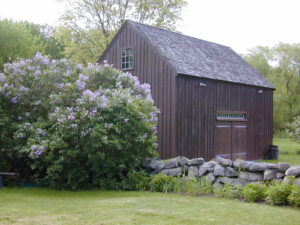 The planning for the Job Lane Barn began in the late 1980’s. Why? There was a long-term plan for the Museum, and it included a barn, equipment and uses for the barn to make a more complete Farm Museum.
Jeannette Pothier was President and called a meeting of the Executive Board who met with the Board of Directors, among them John Filios and Lloyd Walker. It was decided that we should go forward and ask the Town to build a barn with caretaker quarters behind it.
It was at Town Meeting when the Town voted down to build the barn and caretaker quarters that people passed checks along to us, siting in the front row, so that we could raise our own money to build the barn.
We gathered as a Barn Committee and planned to raise the money to build the barn. But how? We held barn yard sales (actually big yard sales), bake sales, and then Jeannette Pothier and Carol Carlson spoke to the Bedford Rotary Club. The Rotary agreed to help us build the barn. We found through the Club, a builder, an architect, and a liaison person. That was Bill Waite Jr., Art Smith, and Nat Brown. Then, they further helped us plan how to raise more money by having each timber, board and nail be associated with someone’s name for the donation. We did a lot of advertising, a great many events, and we found through Bill Waite Jr., a timber framer, Tom Musco, of Royalston Oak Timber Frames. When we had enough money, to buy the hand-hewn timber frame, the planning to raise the barn was in full swing.
With the Rotary Club, volunteers, our members, for a total of over 80 people, the post and beam barn frame was raised on June 26, 1993. The next day the roof and sides were enclosed by nailing boards to them. The story is all on the framed display in the Barn. It took many years, many people, and working very long hours together. We did it, built the barn, made it beautiful, and gave it away. We signed a Deed giving the barn to the Town of Bedford, who had issued a license to allow us to build the barn on the property. Celebrating the 25th year on July 29, 2018. more…